Ads/Posters
3D 자동차 렌더 (시그니처·다이나믹)
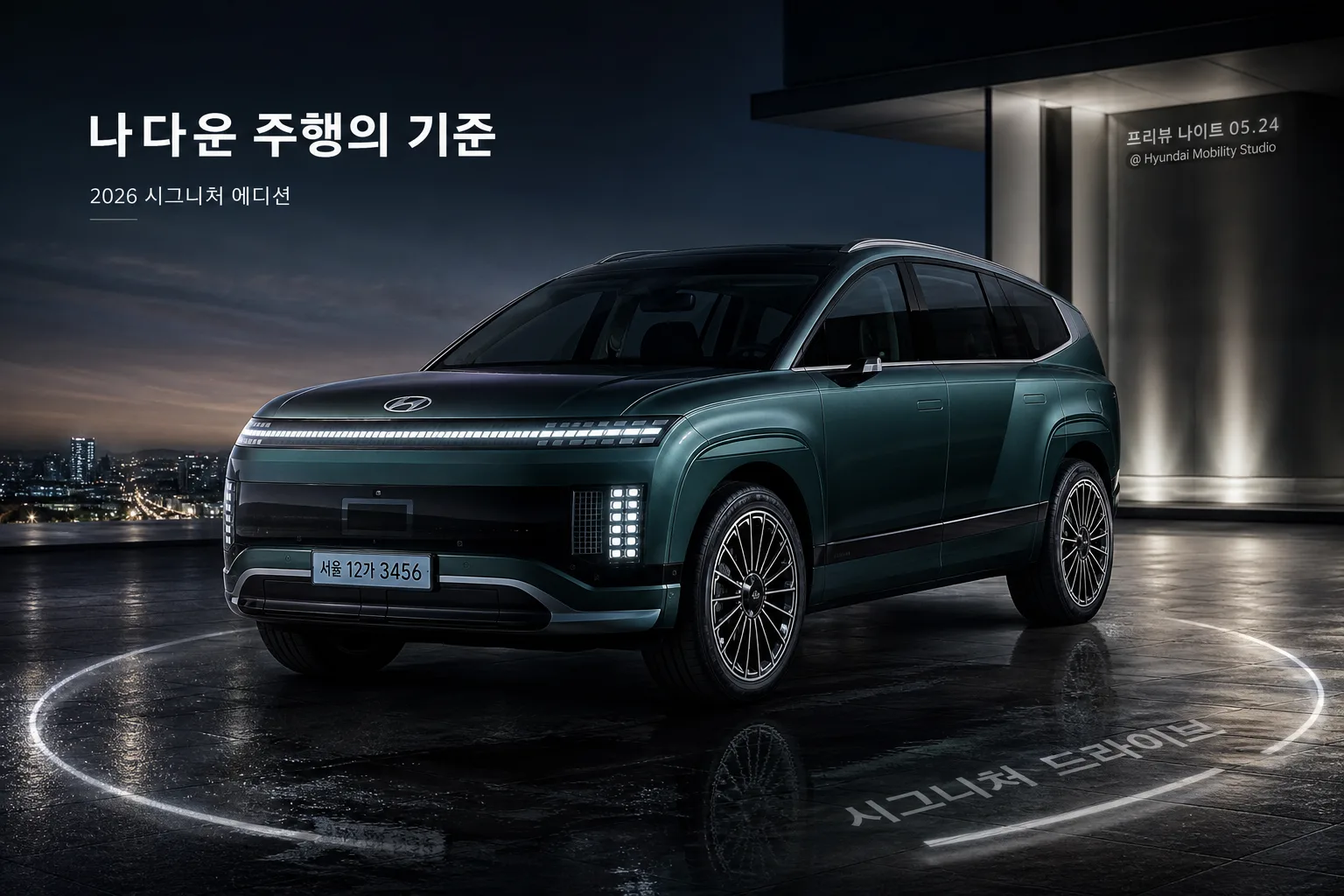
3D 자동차 렌더. 시그니처 컬러 + dramatic 무대.
3D 자동차 렌더 (시그니처·다이나믹) summary
Copy this ChatGPT image prompt to create Ads/Posters results. Its subject, background, style, and composition are organized for quick iteration.
Related keywords: 3D 자동차 렌더 (시그니처·다이나믹), 3D 자동차 렌더 (시그니처·다이나믹) 프롬프트, Ads/Posters 프롬프트, Ads/Posters AI 이미지 프롬프트, ChatGPT 이미지 프롬프트, AI 이미지 생성 프롬프트, AI 프롬프트, 이미지 프롬프트
How to use 3D 자동차 렌더 (시그니처·다이나믹)
Keep the prompt structure and swap the subject, background, palette, or composition to create new variations.
- Keep the main subject and adjust the palette and background for your brand, season, or channel.
- If the result feels busy, simplify the background and make the subject, composition, and lighting more specific.
- After copying, ask ChatGPT to adapt it for your platform, aspect ratio, or text requirements.
Original prompt
[Input]
- language: Korean
- output_size: 1536x1024

[Purpose]
3D automotive CGI render for a signature hero visual, built like a luxury car advertisement with dramatic contrast, tangible environment detail, and premium product storytelling.
Designed for editorial banner use, product showcase, dealership campaign visuals, and high-end marketing assets that feel ready for a real automotive launch.

[Composition]
- Main vehicle placement: {차종} dominates the frame as the hero object, occupying about 65% of the width, slightly off-center for motion tension and premium advertising impact.
- Composition angle: {앵글} with a low, cinematic perspective that emphasizes stance, wheel geometry, front fascia, shoulder line, and sculpted body surfaces.
- Background treatment: {배경} rendered as a realistic premium setting with believable spatial depth: polished asphalt, wet showroom floor, architectural concrete, city light reflections, glass walls, distant signage, lane markings, or subtle atmospheric haze depending on the chosen scene.
- Framing direction: wide landscape layout that keeps the full silhouette readable from bumper to roofline while allowing environmental cues such as floor reflections, light streaks, display panels, road texture, or horizon glow to support the campaign mood.
- Surface and spacing: glossy floor reflections, tire contact shadows, micro-scratches on reflective surfaces, faint dust or moisture in the air, and crisp separation between vehicle and environment.
- Optional advertising realism: add a small Korean license plate such as “서울 12가 3456”, a discreet floor decal reading “시그니처 드라이브”, and tiny showroom/event microtext placed in the background rather than covering the vehicle.

[3. CORE STRUCTURE]
- Hero vehicle layer: {차종} modeled as a highly detailed 3D render with sharp panel edges, refined glass transparency, realistic tire tread, brake calipers, wheel lug details, headlamp internals, grille depth, door gaps, windshield reflections, and premium surface reflections.
- Finish layer: {결} applied to bodywork and trims as a polished CGI material treatment, balancing mirror-like highlights with visible micro-detail on the paint, metal parts, rubber tires, glass, chrome, carbon fiber, or brushed aluminum accents where appropriate.
- Environment layer: {배경} designed to support the vehicle silhouette with rich but controlled context: cinematic urban night ambience, luxury studio architecture, dramatic mountain road, tunnel lighting, coastal highway, or futuristic showroom elements that make the scene feel physically present.
- Lighting layer: {조명} set to carve out the vehicle shape with strong specular highlights on hood, roof, shoulder line, grille, and side panels, plus realistic shadow falloff underneath and reflected light sources visible on paint and glass.
- Color layer: {컬러 톤} used as a signature palette cue, combining the car’s identity with a dark surround, graphite surfaces, reflective metallics, and one focused accent color for premium contrast.
- Format layer: {비율} maintained as a wide advertising composition with balanced left-right tension, strong hero emphasis, and enough environmental storytelling to feel like a finished campaign key visual.
- Detail layer: include realistic road grit near tires, faint water droplets or floor polish streaks when appropriate, soft bokeh highlights in the distance, subtle lens flare from practical lights, and physically accurate reflections that follow the vehicle geometry.

[4. STYLE RULES]
- Typography: allow refined automotive campaign microcopy only if it enhances realism; keep it secondary to the car. Suggested Korean text elements: headline “나다운 주행의 기준”, small line “2026 시그니처 에디션”, background event note “프리뷰 나이트 05.24”, or plate text “서울 12가 3456”.
- Color palette: {컬러 톤} supported by charcoal black, deep graphite, electric accent hues, reflective glass highlights, warm practical lights, and restrained metallic highlights; use near-black tones like #0B0D10 and #12161D for depth.
- Shadow and depth: soft contact shadows under all four tires, realistic occlusion in wheel wells and grille cavities, layered reflections on floor or road surface, gentle atmospheric perspective in the far background, and a subtle cinematic vignette that focuses attention on the vehicle.
- Environment detail: add believable premium ad set elements such as architectural pillars, LED light bars, painted road lines, puddle reflections, glass panels, small wayfinding signs, distant traffic bokeh, or studio rig reflections, scaled naturally and never competing with the vehicle.

[5. VISUAL STYLE]
- Camera / lens: full-frame cinematic CGI look, equivalent to an 85mm lens at f/2.8 for a compressed premium perspective, or a 35mm low-angle beauty shot when the composition needs more environment.
- Lighting: studio-quality key light from upper-left at 45°, strong rim light from rear-right, controlled fill to preserve body contour, practical light reflections from the scene, and soft shadow grounding the tires.
- Color grade: luxury automotive ad grade with deep blacks, cool graphite midtones, vivid accent reflections, selective warm highlights, realistic specular rolloff, and a slightly desaturated background so the vehicle remains dominant.
- Rendering quality: ray-traced reflections, physically based materials, clean anti-aliased edges, realistic glass refraction, accurate tire rubber roughness, and high-resolution texture detail on the vehicle and surrounding surfaces.

[6. MOOD]
Premium automotive campaign visual — Hyundai / Genesis CGI commercial aesthetic with cinematic showroom intensity, dynamic road presence, and museum-level product presentation. The final image should feel like a real launch campaign still: polished, expensive, tactile, and emotionally aspirational.

[7. CRITICAL]
- Korean text accuracy: if any Korean appears, render it cleanly and legibly, such as “나다운 주행의 기준”, “2026 시그니처 에디션”, “프리뷰 나이트 05.24”, or “서울 12가 3456”; do not garble Hangul.
- Composition invariants: the vehicle must remain the single hero subject, fully intact, with precise proportions, realistic reflections, correctly aligned wheels, consistent perspective, and no distortion.
- Realism invariants: preserve believable scale between car, tires, floor, road markings, signage, light sources, and background architecture; reflections must match the scene and not float randomly.
- Render quality: clean CGI realism, no plastic-looking surfaces, no accidental blur on the car body, no extra wheels, no malformed lights, no duplicated vehicle parts, and no impossible panel geometry.

[8. 🚫 PROHIBITED]
- Fake official seals / certifications
- Broken Korean characters