Photo Edits/Filters
음식 오버헤드 플랫레이 사진
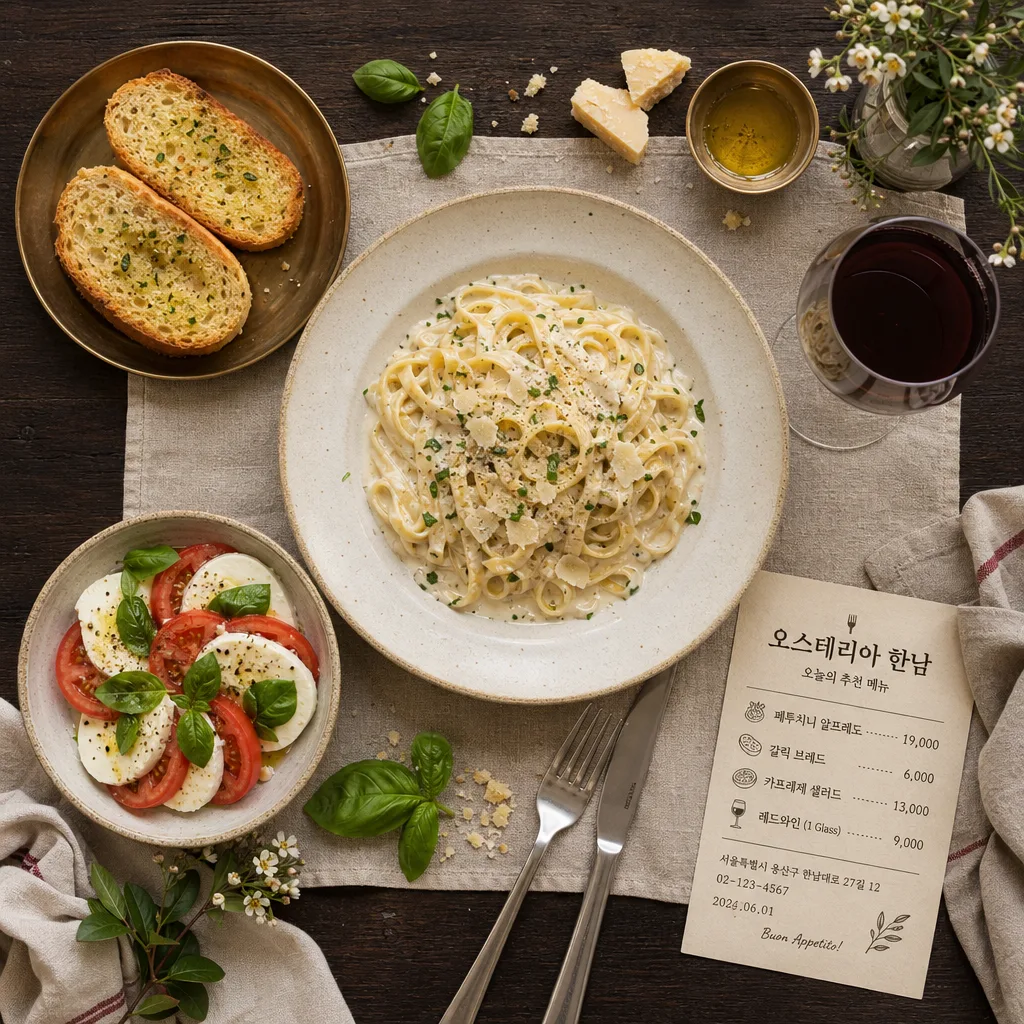
한식·양식·디저트를 위에서 내려다본 플랫레이 톱샷. 식기·소품·잡지 무드. 메뉴북·푸드 매거진·블로그용.
음식 오버헤드 플랫레이 사진 summary
Copy this ChatGPT image prompt to create Photo Edits/Filters results. Its subject, background, style, and composition are organized for quick iteration.
Related keywords: 음식 오버헤드 플랫레이 사진, 음식 오버헤드 플랫레이 사진 프롬프트, Photo Edits/Filters 프롬프트, Photo Edits/Filters AI 이미지 프롬프트, ChatGPT 이미지 프롬프트, AI 이미지 생성 프롬프트, AI 프롬프트, 이미지 프롬프트
How to use 음식 오버헤드 플랫레이 사진
Keep the prompt structure and swap the subject, background, palette, or composition to create new variations.
- Keep the main subject and adjust the palette and background for your brand, season, or channel.
- If the result feels busy, simplify the background and make the subject, composition, and lighting more specific.
- After copying, ask ChatGPT to adapt it for your platform, aspect ratio, or text requirements.
Original prompt
[Input]
- language: Korean
- output_size: 1024x1024

[Purpose]
Magazine-quality overhead flat lay food photograph, square layout for menu book, restaurant Instagram feed, and editorial food feature.
Create a realistic tabletop scene where plated dishes, serving ware, small menu-card typography, and natural dining details feel like a photographed restaurant spread rather than a sterile product shot.

[Composition]
- Center the main food arrangement across about 70% of the frame, with the primary dish slightly above center and side items distributed in a stable triangular balance.
- Use {음식 컨셉} as the focal menu set, arranged to read clearly from above with no perspective tilt.
- Build the scene on {플레이팅}, allowing the table grain, ceramic glaze, folded fabric, and small dining marks to remain visible and tactile.
- Place {보조 소품} around the dishes as natural restaurant-table details: utensils, napkin folds, herb sprigs, a small flower, wine glass reflections, tiny bread crumbs, and a few ingredient accents.
- Add a small printed menu card or receipt-style placard near the lower-right quadrant, partially tucked under a utensil or napkin, using {매장명}, {메뉴카드 제목}, dish names, prices, address, contact, and date.
- Keep all dish edges, utensils, card edges, and cloth lines aligned to {카메라 시점} so the entire frame reads as a true top-down flat lay.

[3. CORE STRUCTURE]
- Hero food area (middle 55%): present {음식 컨셉} as the main editorial spread, with the largest plate acting as the visual anchor and the side dishes forming a natural dining rhythm.
- Surface layer: apply {플레이팅} with realistic wood grain, ceramic sheen, soft linen texture, faint cutlery reflections, and warm tabletop depth.
- Prop ring: place {보조 소품} as secondary accents, using one richer cluster near the lower-left and a smaller counterbalance near the upper-right, including believable small ingredients from the dishes.
- Menu-card detail: include a cream paper card with thin divider lines, small icons, prices, and contact details; it should feel like an actual restaurant menu insert photographed on the table.
- Camera read: maintain {카메라 시점} so every dish looks flattened and evenly oriented, with no dramatic depth distortion.
- Color emphasis: render {색감} through natural ingredient tones, warm neutrals, tomato red, basil green, wine burgundy, toasted bread, and subtle contrast between food, table, props, and printed paper.
- Usage framing: compose for {용도} and {비율/사이즈}, making the scene suitable as both a menu-book top shot and a polished social media food image.

[4. STYLE RULES]
- Typography: include only realistic printed typography on the menu card/receipt placard, not a floating digital overlay; use clean Korean editorial sans-serif for headings and small serif or monospaced receipt-style text for prices.
- Menu-card content: show store name, three menu lines with prices, address, contact, date, and a short editorial label; use thin dividers and tiny decorative food icons such as a fork, leaf, or wine glass.
- Color palette: warm beige, walnut brown, ceramic ivory, tomato red, basil green, wine burgundy, muted charcoal ink, and the appetizing mid-tone food colors from {색감}.
- Decorative details: allow realistic table styling such as linen folds, herb flakes, bread crumbs, olive-oil sheen, condensation on glass, ceramic rim highlights, and small shadows from raised plates.
- Border/shadow: soft natural shadows beneath plates, utensils, card, and glass, approximately 4px y-offset, 12px blur, 15% opacity, with crisp object edges and a gentle editorial contrast curve.

[5. VISUAL STYLE]
- Camera / lens: full-frame camera with a 35mm lens at f/8, perfectly perpendicular overhead setup for a flat lay editorial look.
- Lighting: diffuse natural window light from upper-left at about 45°, with gentle fill from the right and soft shadow falloff under plates, glassware, cutlery, and the paper menu card.
- Color grade: warm editorial neutrals with slightly boosted food saturation, clean white balance, realistic highlights on sauces and ceramics, and a subtle filmic contrast curve.
- Material realism: pasta sauce should look creamy and dimensional, salad tomatoes glossy, basil fresh, bread crust crisp, wine translucent burgundy, and paper typography printed into the card surface.

[6. MOOD]
Korean food magazine editorial — warm restaurant tabletop styling, appetizing but refined, like a premium menu-book top shot with lived-in dining details and polished social feed appeal.

[7. CRITICAL]
- Korean text accuracy: the printed menu card must contain clean, readable Korean text with no broken characters.
- Render the menu card text exactly as: "{매장명}" / "{메뉴카드 제목}" / "{메뉴1}  {가격1}" / "{메뉴2}  {가격2}" / "{메뉴3}  {가격3}" / "{주소}" / "{연락처}" / "{촬영 날짜}".
- Layout invariant: maintain a true 90-degree overhead view, with all plates, cutlery, paper card, glass, and props appearing evenly oriented and not skewed.
- Composition invariant: the food set must remain tidy, balanced, magazine-ready, and realistic, with believable shadows, natural tabletop textures, and appetizing ingredient detail.

[8. 🚫 PROHIBITED]
- Fake official seals / certifications
- Broken Korean characters
- Celebrity composites / unauthorized portrait likenesses