照片轉換/濾鏡
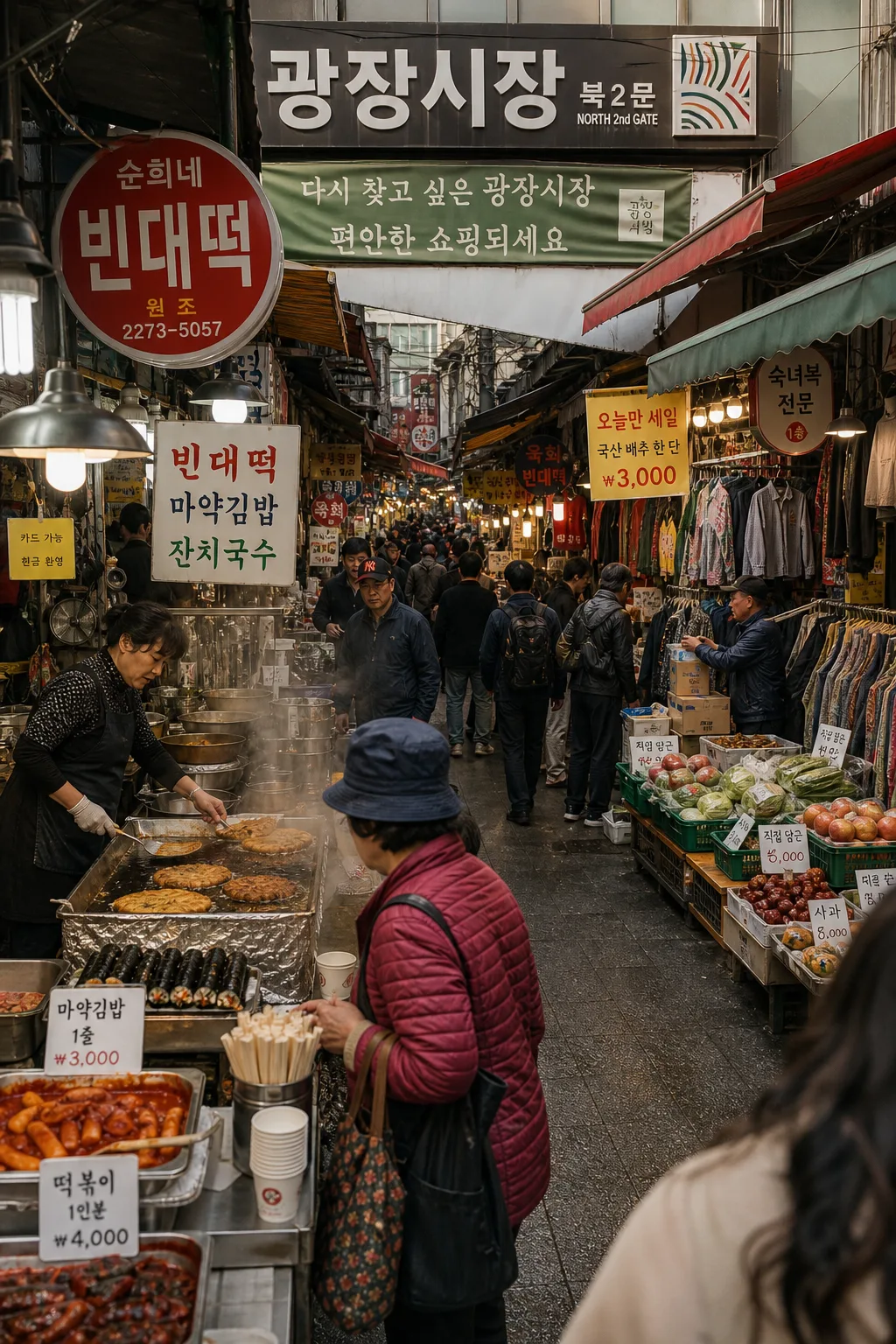
한국 재래시장 실사 사진
한국 재래시장 photoreal 사진. 광장시장·동대문·남대문·통인·망원·신촌 시장. 음식·간판·인파·골목 디테일.
한국 재래시장 실사 사진摘要
這是用來製作照片轉換/濾鏡內容的 ChatGPT 圖像提示詞,已整理主題、背景、風格與構圖,方便快速調整。
相關關鍵字: 한국 재래시장 실사 사진, 한국 재래시장 실사 사진 프롬프트, 照片轉換/濾鏡 프롬프트, 照片轉換/濾鏡 AI 이미지 프롬프트, ChatGPT 이미지 프롬프트, AI 이미지 생성 프롬프트, AI 프롬프트, 이미지 프롬프트
한국 재래시장 실사 사진使用方式
保留原始結構並替換主體、背景、色彩或構圖,即可延伸出不同版本。
- 保留核心主體,並依品牌、季節或平台調整色彩與背景。
- 如果畫面太複雜,請減少背景元素並具體描述主體、構圖與光線。
- 複製後可要求 ChatGPT 配合平台、長寬比或文字需求調整。
提示詞原文
[Input]
- language: Korean
- output_size: 1024x1536

[Purpose]
Korean traditional market documentary photo, vertical editorial travel image.
Documentary street-market scene for travel magazine use, with realistic everyday activity, dense merchandise, handwritten signage, and tactile street-level visual texture.

[Composition]
- Main scene: a narrow Korean market alley photographed from a walking eye-level perspective, with {시장명} visible as the clear setting through an entrance sign, hanging banner, or shopfront signboard.
- Subject density: foreground shoppers, midground vendors, steam-filled food stalls, handwritten price tags, and background signboards layered to create a deep, crowded, believable market feel.
- Background treatment: weathered awnings, red and green vinyl canopies, hanging signs, exposed amber bulbs, plastic crates, stainless prep tables, tiled floors, drainage covers, old posters, tape marks, and worn surfaces with natural grime and patina.
- Framing direction: guide the eye forward along the alley so the viewer feels like they are walking through {시장명}; allow overlapping people, merchandise, and signage to fill the vertical frame naturally.
- Include everyday market micro-details: reusable shopping bags, black plastic produce bags, a vendor counting cash, paper cups, chopsticks, steam from pans, wet pavement reflections, delivery boxes, small price cards, and taped notices.
- Use {시장 모티프} as the dominant visual cue across stalls, carts, trays, menu boards, and storefront displays, while surrounding it with complementary items typically found in a Korean traditional market.

[3. CORE STRUCTURE]
- Foreground (bottom 20%): a few market-goers partially entering frame, such as an elderly shopper holding vegetables, a vendor’s gloved hands packing food, and a blurred shoulder or shopping bag near the lens; natural motion blur is acceptable when realistic.
- Left side stalls (35%): food vendors and displays related to {시장 모티프}, with steam, trays, metal bowls, cutting boards, tongs, oil sheen, handwritten menu boards, plastic-wrapped ingredients, and price tags visible in a documentary way.
- Right side stalls (35%): produce crates, snack counters, clothing racks, household goods, or dried-food bins depending on the market composition, with dense merchandising, taped labels, stacked baskets, and hanging scales.
- Center corridor (vertical path): a narrow walking lane leading deeper into {시장명}, with overlapping pedestrians, scooters or delivery carts parked at the edge if appropriate, hanging signs, and layered stall fronts creating strong perspective depth.
- Mid/background (upper 45%): older shop façades, signboards, awnings, electrical wires, ceiling beams, fluorescent tubes, pendant bulbs, ventilation ducts, and market arcade structure visible where appropriate, grounded in real Korean market architecture.
- Atmosphere layer: emphasize the active rhythm of {시간대·날씨}, including the sense of crowd movement, vendor chatter, food steam, damp air, and lived-in neighborhood street energy.

[4. STYLE RULES]
- Typography: visible signage should look like real Korean market lettering: printed vinyl banners, laminated menus, handwritten marker price tags, faded shop signs, and taped notices; keep Hangul legible, natural, and slightly worn.
- In-scene text examples to include naturally where relevant: “{시장명}”, “오늘만 세일”, “국산 배추 한 단 ₩3,000”, “따끈한 어묵 3개 ₩2,000”, “순대·튀김”, “카드 가능”, “현금 환영”, “직접 담근 반찬”.
- Color palette: use {컬러 톤} with faded amber, charcoal, red canopy accents, dull stainless steel, green produce tones, warm bulb highlights, and muted skin tones; keep saturation controlled and photographic.
- Edge treatment: let the frame crop naturally through people, bags, awnings, and stall edges, as in a candid street photograph; use natural shadowing from awnings and overhead bulbs with subtle contrast separation between stalls and people.
- Surface detail: preserve realistic paper-thin wrappers, oil sheen on pans, steam haze, reflective metal, condensation on plastic covers, damp tile reflections, rough awning fabric, worn cardboard boxes, and scuffed floor texture.

[5. VISUAL STYLE]
- Camera / lens: shot on Fujifilm X-T5, 23mm f/2, ISO 400, f/4, documentary street photography framing with moderate depth of field.
- Lighting: natural daylight mixed with warm pendant shop lights and fluorescent tubes, lightly diffused by {시간대·날씨}, with gentle contrast, believable shadows under awnings, and realistic mixed color temperatures.
- Color grade: Portra-style film tonality with faded amber, charcoal, soft reds, muted greens, and restrained highlights; preserve authentic market color imbalance instead of overly clean correction.

[6. MOOD]
Candid documentary travel editorial — like a National Geographic street-market feature with a subtle Portra 400 film look, full of everyday human presence, food aroma, weathered surfaces, and neighborhood market warmth.

[7. CRITICAL]
- Korean text accuracy: all visible Korean signage must remain fully legible and natural; render Hangul cleanly in signs such as “{시장명}”, “오늘만 세일”, “국산 배추 한 단 ₩3,000”, “따끈한 어묵 3개 ₩2,000”, and “카드 가능”.
- The image must feel like a real Korean traditional market scene, with no staged commercial polish and no artificially arranged symmetry.
- Maintain realistic crowd scale, stall proportions, food handling details, and market clutter consistent with an operating neighborhood market.
- Keep {시장 모티프}, {시간대·날씨}, {구도·앵글}, {라이팅}, {컬러 톤}, and {카메라·렌즈} visually reflected in the final scene while preserving the Fujifilm X-T5 documentary feel.

[8. 🚫 PROHIBITED]
- Fake official seals / certifications
- Broken Korean characters