Photo Edits/Filters
애니메이션 일러스트 사진 변환
본인 사진 → 일본 anime 결로 변환. 지브리·신카이 톤.
애니메이션 일러스트 사진 변환 summary
Copy this ChatGPT image prompt to create Photo Edits/Filters results. Its subject, background, style, and composition are organized for quick iteration.
Related keywords: 애니메이션 일러스트 사진 변환, 애니메이션 일러스트 사진 변환 프롬프트, Photo Edits/Filters 프롬프트, Photo Edits/Filters AI 이미지 프롬프트, ChatGPT 이미지 프롬프트, AI 이미지 생성 프롬프트, AI 프롬프트, 이미지 프롬프트
How to use 애니메이션 일러스트 사진 변환
Keep the prompt structure and swap the subject, background, palette, or composition to create new variations.
- Keep the main subject and adjust the palette and background for your brand, season, or channel.
- If the result feels busy, simplify the background and make the subject, composition, and lighting more specific.
- After copying, ask ChatGPT to adapt it for your platform, aspect ratio, or text requirements.
Original prompt
[Input]
- reference_image: {참고 이미지}
- language: Korean
- output_size: 1024x1536

[Purpose]
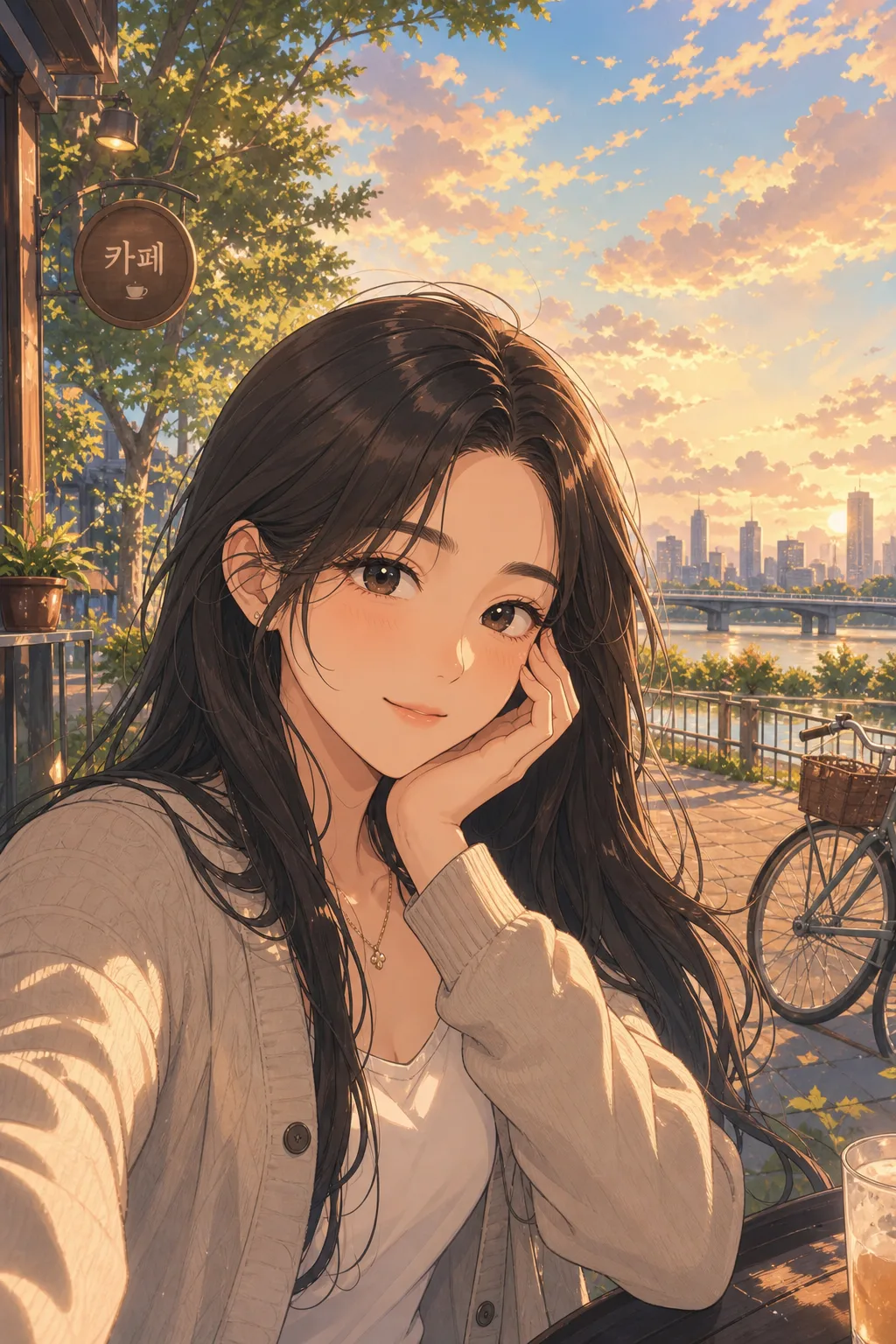
Anime illustration conversion from an input portrait/photo into a Japanese-style i2i character image. Preserve the original person’s identity and pose while translating the scene into a warm, content-rich anime still with polished 셀 셰이딩, believable environment detail, and a lived-in cinematic atmosphere.

[Composition]
- Main subject: {참고 이미지} is the clear focal point, occupying about 60% of the vertical frame, with the face and upper body kept closest to the camera perspective from the source image.
- Pose and expression: preserve {자세·표정} from the reference photo, keeping the head angle, shoulder line, gaze direction, and hand placement consistent with the original composition.
- Background treatment: replace the source background with {배경 결}, rendered as a softly painted anime environment with layered depth, recognizable everyday details, and natural atmosphere behind the subject.
- Environmental richness: include subtle real-world anime details that fit {배경 결}, such as warm window reflections, potted plants, a distant bicycle, cafe stools, soft street signage, utility wires, falling leaves, light dust particles, or blurred passersby far in the background.
- Color direction: apply {컬러 팔레트} across clothing accents, skin shading, sky/land tones, signage accents, props, and atmospheric highlights for a cohesive animated look.
- Framing: maintain a portrait-oriented composition with natural headroom and balanced depth, using foreground bokeh or soft environmental layers to make the portrait feel like a captured anime scene rather than an isolated character cutout.

[Core Structure]
- Subject pass: redraw {참고 이미지} as a faithful anime character while preserving facial identity, hairstyle silhouette, eye spacing, jawline impression, and recognizable features from the source.
- Pose pass: lock in {자세·표정} so the final illustration matches the original body language instead of creating a new pose.
- Line and shading pass: use crisp clean linework, soft 셀 셰이딩, and gentle gradient transitions on cheeks, hair strands, eyelids, hands, and clothing folds.
- Clothing/material pass: translate the source outfit into anime form while retaining its recognizable shape, fabric weight, seams, collars, buttons, accessories, and small highlights from {컬러 팔레트}.
- Background pass: build {배경 결} with simplified but atmospheric anime scenery, including perspective lines, light reflections, small props, believable surfaces, and soft background characters or objects only where they support the scene.
- Detail pass: add cinematic micro-details such as reflected sky color on hair edges, tiny highlights in the eyes, soft blush, fabric creases, rim-lit flyaway hairs, and dust or pollen catching the light.
- Color pass: blend {컬러 팔레트} into skin highlights, shadow edges, environmental accents, and background props, keeping the overall palette warm and harmonious.
- Final conversion pass: enforce {anime 결} as the dominant visual finish, with a polished Japanese anime illustration feel rather than a realistic photo filter.
- Aspect pass: keep the final output in {비율} without cropping important facial features, hands, hairstyle, or defining outfit details.

[Style Rules]
- Typography: no main title overlay; if background signage naturally appears, keep it short and legible in Korean, such as “카페”, “오늘의 메뉴”, or “봄 산책”, integrated into the environment rather than placed as graphic design text.
- Color palette: use {컬러 팔레트} with soft warm amber highlights, pastel sky tones, natural greens/blues where applicable, and slightly desaturated shadows for anime readability.
- Environment style: background objects should feel hand-painted and cohesive with the character, with enough detail to suggest a real place while staying secondary to the portrait.
- Line quality: clean anime contour lines on the face and hair, slightly lighter lines on clothing and background, with controlled variation in line weight around eyes, chin, fingers, and hair tips.
- Border/shadow: if a subject separation effect is needed, use natural rim light and ambient occlusion from the scene rather than a graphic outline halo.

[Visual Style]
- Camera / lens: portrait-photo base translated as if shot on a 85mm f/1.8 lens, shallow depth of field, then stylized into anime line art while preserving the original framing.
- Lighting: soft diffused daylight from upper-left at roughly 45°, with a gentle fill from the opposite side, mild rim light to separate hair from the background, and tiny specular accents on eyes and hair.
- Color grade: warm Japanese anime grade with pastel mids, amber highlights, and clean natural shadows; avoid neon saturation and avoid heavy HDR contrast.
- Depth: foreground elements may be softly blurred, midground subject remains sharp, and background elements fade into painterly bokeh for a believable portrait still.
- Texture: use delicate anime-painted texture on hair, clothing, skin blush, street surfaces, foliage, glass, paper signs, or wood grain where appropriate to {배경 결}.

[Mood]
Warm Japanese anime character illustration — a polished modern anime still with the emotional clarity, gentle realism, and scene richness of a Kyoto Animation key visual, as if {참고 이미지} was captured during a quiet memorable moment in a living anime world.

[Critical]
- Korean text accuracy: if any background Korean text appears, render it cleanly and keep it short, for example “카페”, “오늘의 메뉴”, “봄 산책”, “맑은 날”.
- Preserve identity: {참고 이미지} must remain recognizable as the same person from the input image.
- Preserve pose: {자세·표정} must match the source composition as closely as possible.
- Maintain a natural anime conversion: clean linework, believable facial proportions, consistent age impression, and no excessive beautification that changes the person.
- Keep {anime 결}, {배경 결}, {컬러 팔레트}, and {비율} clearly reflected in the final image.

[8. 🚫 PROHIBITED]
- Fake official seals/certifications
- Broken Korean characters
- Celebrity composites or unauthorized likeness substitution