広告・ポスター
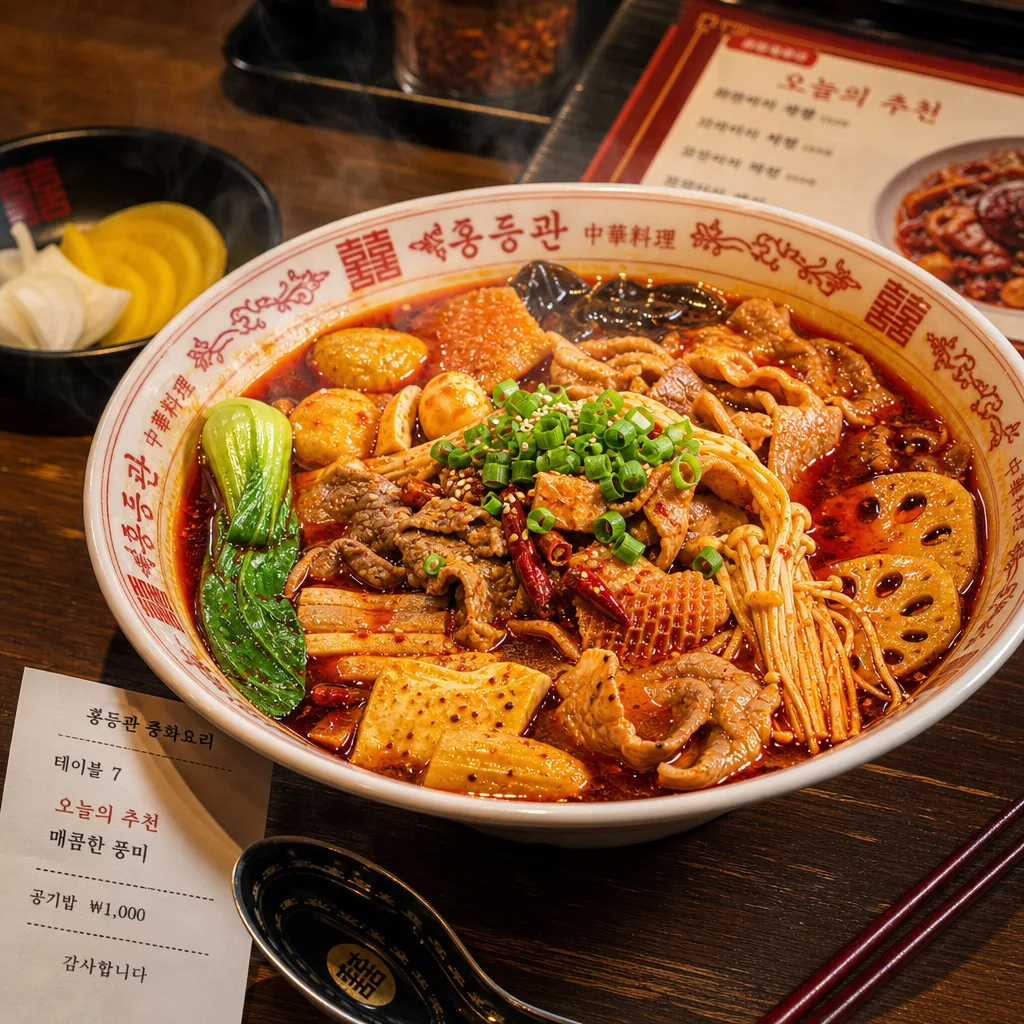
중식 클로즈업 디테일 사진
중식 디테일 사진. 마라탕·딤섬·짜장면·짬뽕 결.
중식 클로즈업 디테일 사진の概要
広告・ポスター画像を作るためのChatGPT画像プロンプトです。主題、背景、スタイル、構図を整理し、すぐに試せるよう構成しています。
関連キーワード: 중식 클로즈업 디테일 사진, 중식 클로즈업 디테일 사진 프롬프트, 広告・ポスター 프롬프트, 広告・ポスター AI 이미지 프롬프트, ChatGPT 이미지 프롬프트, AI 이미지 생성 프롬프트, AI 프롬프트, 이미지 프롬프트
중식 클로즈업 디테일 사진の活用方法
元の構造を保ちながら、被写体、背景、色、構図を変更して別案に展開できます。
- 主題を維持し、ブランドや季節、媒体に合わせて色と背景を変更してください。
- 結果が複雑な場合は背景要素を減らし、被写体、構図、照明を具体化してください。
- コピー後、ChatGPTに媒体、アスペクト比、文字の有無を追加で指定できます。
プロンプト原文
[Input]
- language: Korean
- output_size: 1024x1024

[Purpose]
Close-up Chinese cuisine detail photo for social media and menu use, focused on one richly plated {중식 종류} with visible steam, glossy sauce or broth surface, tactile ingredient detail, and a believable restaurant tabletop atmosphere.

[Composition]
- Main dish placement: {중식 종류} occupies 65% of the frame, placed slightly off-center with a tight crop that emphasizes texture, sauce sheen, steam trails, oil highlights, crispy edges, noodle strands, dumpling folds, vegetables, or ingredient layers depending on the dish.
- Table setting: {상차림} arranged naturally around the dish within the lower 20% and side edges, including believable dining details such as lacquer chopsticks, a porcelain spoon, a small dipping sauce dish, a folded napkin, a tea cup, chili oil jar, scallion garnish spill, or a small side plate that supports the hero dish.
- Background treatment: dark wooden Chinese restaurant table with visible grain, small sauce marks, warm reflections, and a softly blurred laminated menu strip or order slip in the far background for authentic dining-room context.
- Practical text props: include small legible Korean restaurant details on props, such as a receipt or menu corner reading “오늘의 추천”, “테이블 7”, “매콤한 풍미”, “공기밥 ₩1,000”, or “홍등관 중화요리”, kept secondary and integrated into the tabletop scene.
- Framing direction: tight food close-up with a rich tabletop environment visible at the edges, designed to feel like an intimate restaurant dish photographed just before eating.
- Use {중식 종류}, {상차림}, {조명}, {각도}, {컬러}, {스타일링}, {비율} as the customizable elements.

[3. CORE STRUCTURE]
1. Hero food area: Render {중식 종류} as the dominant subject, with realistic gloss, visible steam, sauce cling, crisp ingredient separation, and appetizing imperfections so the texture reads immediately.
2. Garnish and side items: Place the {상차림} elements near the plate or bowl edge, keeping them believable and slightly irregular, as if arranged by a busy restaurant server and adjusted for a food photo.
3. Lighting emphasis: Build the scene with {조명} so highlights catch surface oils, steam, sesame seeds, scallion cuts, porcelain rims, metal spoon edges, and sauce thickness without flattening the food.
4. Camera angle: Compose from {각도}, preserving depth in noodles, dumplings, broth, fried crust, stir-fried vegetables, or glossy sauce while keeping the dish readable at first glance.
5. Color relationship: Apply {컬러} across the dish, props, and background accents so the reds, blacks, golds, whites, and greens feel like a classic Chinese restaurant palette with natural food warmth.
6. Surface and props: Add {스타일링} as secondary context, including tactile details such as chopstick lacquer shine, porcelain glaze, paper receipt fibers, menu lamination glare, chili flakes, sesame oil droplets, and wooden table scratches.
7. Format control: Keep the image perfectly square per {비율}, with the subject centered enough for thumbnail clarity but still slightly dynamic and editorial.

[4. STYLE RULES]
- Typography: visible text should appear only as practical restaurant signage, menu corners, order slips, receipt print, or table labels in simple printed Korean/Chinese restaurant styling; set small prop text in Korean such as “오늘의 추천”, “홍등관 중화요리”, “테이블 7”, “매콤한 풍미”, and “공기밥 ₩1,000”.
- Color palette: {컬러} with deep lacquer red, matte black, warm gold, porcelain white, dark soy brown, chili red oil, and fresh green scallion accents; keep saturation rich, realistic, and food-driven.
- Border/shadow: subtle natural contact shadows under bowls, plates, chopsticks, spoons, sauce dishes, and cups, with soft 8px blur and low-opacity shadowing to keep the food grounded.
- Food realism: emphasize irregular handmade textures, sauce pooling, steam density variation, tiny oil beads, char marks, crispy edges, translucent onion or pepper pieces, and natural garnish scatter.

[5. VISUAL STYLE]
- Camera / lens: full-frame camera look with a 50mm macro lens at f/3.2, crisp focus on the front edge of the dish and slight falloff toward the back.
- Lighting: strong tungsten practical-style key light from upper-right, enhanced with warm steam highlight and a small fill from left to preserve detail in the shadows.
- Color grade: warm red-brown restaurant grade with gold highlights, black depth, and clean white porcelain balance, matching a traditional Chinese dining photo aesthetic.

[6. MOOD]
Classic Chinese restaurant food editorial — like a high-end menu photograph from a well-lit Hong Kong eatery, with tactile steam, glossy surface detail, warm tabletop reflections, and the feeling of a freshly served dish in a lively dining room.

[7. CRITICAL]
- Korean text accuracy: no broken Korean characters anywhere in the image.
- Composition requirement: maintain the close-up food-first framing, with {중식 종류} clearly centered as the hero and the {상차림} details functioning as believable dining context.
- Render any visible Korean prop text cleanly and plausibly, especially “오늘의 추천”, “홍등관 중화요리”, “테이블 7”, “매콤한 풍미”, and “공기밥 ₩1,000”.
- Food must look real, hot, freshly cooked, and restaurant-plated, with natural steam, moisture, sauce thickness, ingredient separation, and edible texture.

[8. 🚫 PROHIBITED]
- Fake official seals / certifications
- Broken Korean characters