광고/포스터
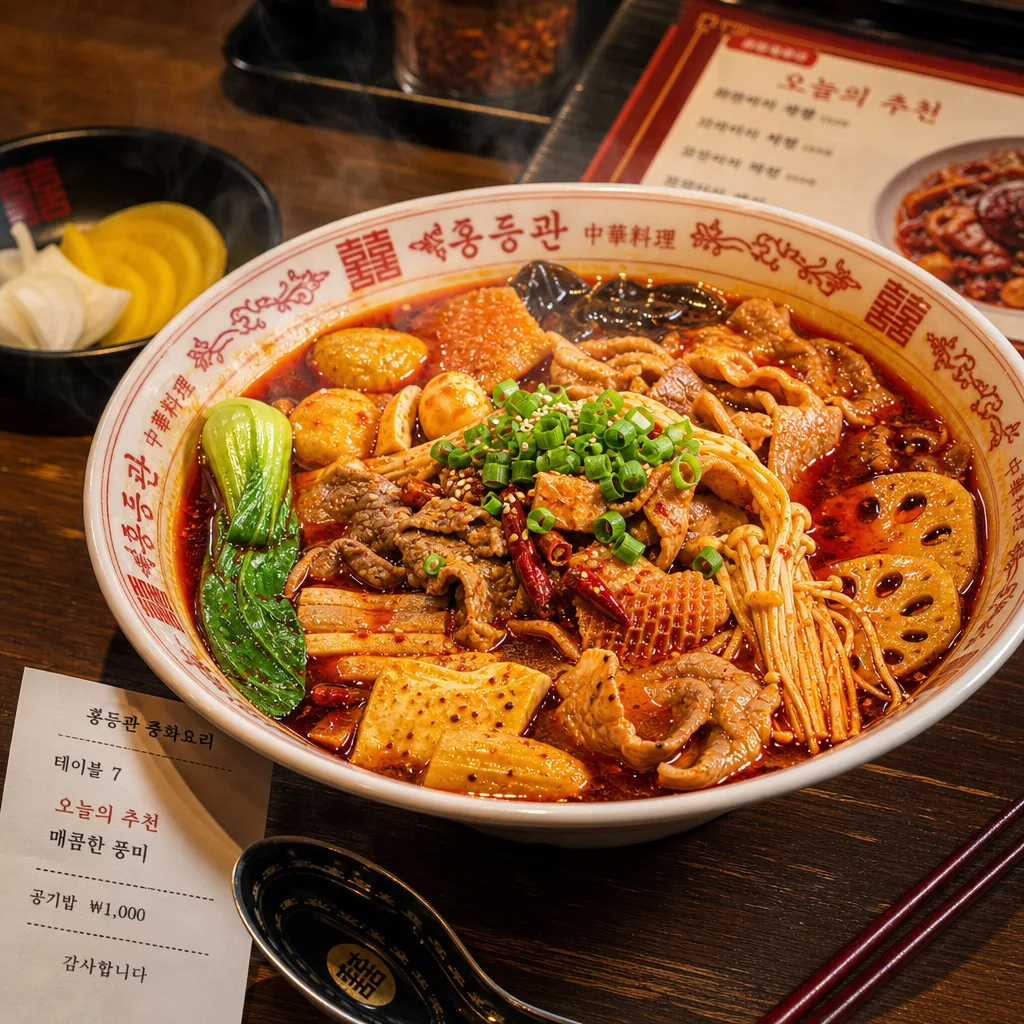
중식 클로즈업 디테일 사진
중식 디테일 사진. 마라탕·딤섬·짜장면·짬뽕 결.
중식 클로즈업 디테일 사진 검색 요약
중식 클로즈업 디테일 사진은 광고/포스터 결과물을 만들 때 바로 복사해 활용할 수 있는 ChatGPT 이미지 프롬프트입니다. 주제, 배경, 스타일, 구도 조건을 함께 담아 빠르게 시안을 만들 수 있도록 구성했습니다.
관련 키워드: 중식 클로즈업 디테일 사진, 중식 클로즈업 디테일 사진 프롬프트, 광고/포스터 프롬프트, 광고/포스터 AI 이미지 프롬프트, ChatGPT 이미지 프롬프트, AI 이미지 생성 프롬프트, AI 프롬프트, 이미지 프롬프트
중식 클로즈업 디테일 사진 활용 포인트
원본 구조를 유지하면서 피사체, 배경, 색감, 구도를 바꿔 다양한 시안으로 확장할 수 있습니다.
- 핵심 소재는 유지하고 브랜드, 계절, 채널 목적에 맞는 색감과 배경을 바꿔보세요.
- 결과가 산만하면 배경 요소를 줄이고 피사체, 구도, 조명 조건을 구체화하세요.
- 복사한 뒤 ChatGPT에서 플랫폼, 화면 비율, 텍스트 포함 여부를 추가로 요청할 수 있습니다.
프롬프트 원문
[Input]
- language: Korean
- output_size: 1024x1024

[Purpose]
Close-up Chinese cuisine detail photo for social media and menu use, focused on one richly plated {중식 종류} with visible steam, glossy sauce or broth surface, tactile ingredient detail, and a believable restaurant tabletop atmosphere.

[Composition]
- Main dish placement: {중식 종류} occupies 65% of the frame, placed slightly off-center with a tight crop that emphasizes texture, sauce sheen, steam trails, oil highlights, crispy edges, noodle strands, dumpling folds, vegetables, or ingredient layers depending on the dish.
- Table setting: {상차림} arranged naturally around the dish within the lower 20% and side edges, including believable dining details such as lacquer chopsticks, a porcelain spoon, a small dipping sauce dish, a folded napkin, a tea cup, chili oil jar, scallion garnish spill, or a small side plate that supports the hero dish.
- Background treatment: dark wooden Chinese restaurant table with visible grain, small sauce marks, warm reflections, and a softly blurred laminated menu strip or order slip in the far background for authentic dining-room context.
- Practical text props: include small legible Korean restaurant details on props, such as a receipt or menu corner reading “오늘의 추천”, “테이블 7”, “매콤한 풍미”, “공기밥 ₩1,000”, or “홍등관 중화요리”, kept secondary and integrated into the tabletop scene.
- Framing direction: tight food close-up with a rich tabletop environment visible at the edges, designed to feel like an intimate restaurant dish photographed just before eating.
- Use {중식 종류}, {상차림}, {조명}, {각도}, {컬러}, {스타일링}, {비율} as the customizable elements.

[3. CORE STRUCTURE]
1. Hero food area: Render {중식 종류} as the dominant subject, with realistic gloss, visible steam, sauce cling, crisp ingredient separation, and appetizing imperfections so the texture reads immediately.
2. Garnish and side items: Place the {상차림} elements near the plate or bowl edge, keeping them believable and slightly irregular, as if arranged by a busy restaurant server and adjusted for a food photo.
3. Lighting emphasis: Build the scene with {조명} so highlights catch surface oils, steam, sesame seeds, scallion cuts, porcelain rims, metal spoon edges, and sauce thickness without flattening the food.
4. Camera angle: Compose from {각도}, preserving depth in noodles, dumplings, broth, fried crust, stir-fried vegetables, or glossy sauce while keeping the dish readable at first glance.
5. Color relationship: Apply {컬러} across the dish, props, and background accents so the reds, blacks, golds, whites, and greens feel like a classic Chinese restaurant palette with natural food warmth.
6. Surface and props: Add {스타일링} as secondary context, including tactile details such as chopstick lacquer shine, porcelain glaze, paper receipt fibers, menu lamination glare, chili flakes, sesame oil droplets, and wooden table scratches.
7. Format control: Keep the image perfectly square per {비율}, with the subject centered enough for thumbnail clarity but still slightly dynamic and editorial.

[4. STYLE RULES]
- Typography: visible text should appear only as practical restaurant signage, menu corners, order slips, receipt print, or table labels in simple printed Korean/Chinese restaurant styling; set small prop text in Korean such as “오늘의 추천”, “홍등관 중화요리”, “테이블 7”, “매콤한 풍미”, and “공기밥 ₩1,000”.
- Color palette: {컬러} with deep lacquer red, matte black, warm gold, porcelain white, dark soy brown, chili red oil, and fresh green scallion accents; keep saturation rich, realistic, and food-driven.
- Border/shadow: subtle natural contact shadows under bowls, plates, chopsticks, spoons, sauce dishes, and cups, with soft 8px blur and low-opacity shadowing to keep the food grounded.
- Food realism: emphasize irregular handmade textures, sauce pooling, steam density variation, tiny oil beads, char marks, crispy edges, translucent onion or pepper pieces, and natural garnish scatter.

[5. VISUAL STYLE]
- Camera / lens: full-frame camera look with a 50mm macro lens at f/3.2, crisp focus on the front edge of the dish and slight falloff toward the back.
- Lighting: strong tungsten practical-style key light from upper-right, enhanced with warm steam highlight and a small fill from left to preserve detail in the shadows.
- Color grade: warm red-brown restaurant grade with gold highlights, black depth, and clean white porcelain balance, matching a traditional Chinese dining photo aesthetic.

[6. MOOD]
Classic Chinese restaurant food editorial — like a high-end menu photograph from a well-lit Hong Kong eatery, with tactile steam, glossy surface detail, warm tabletop reflections, and the feeling of a freshly served dish in a lively dining room.

[7. CRITICAL]
- Korean text accuracy: no broken Korean characters anywhere in the image.
- Composition requirement: maintain the close-up food-first framing, with {중식 종류} clearly centered as the hero and the {상차림} details functioning as believable dining context.
- Render any visible Korean prop text cleanly and plausibly, especially “오늘의 추천”, “홍등관 중화요리”, “테이블 7”, “매콤한 풍미”, and “공기밥 ₩1,000”.
- Food must look real, hot, freshly cooked, and restaurant-plated, with natural steam, moisture, sauce thickness, ingredient separation, and edible texture.

[8. 🚫 PROHIBITED]
- Fake official seals / certifications
- Broken Korean characters