광고/포스터
한국 분식 길거리 음식
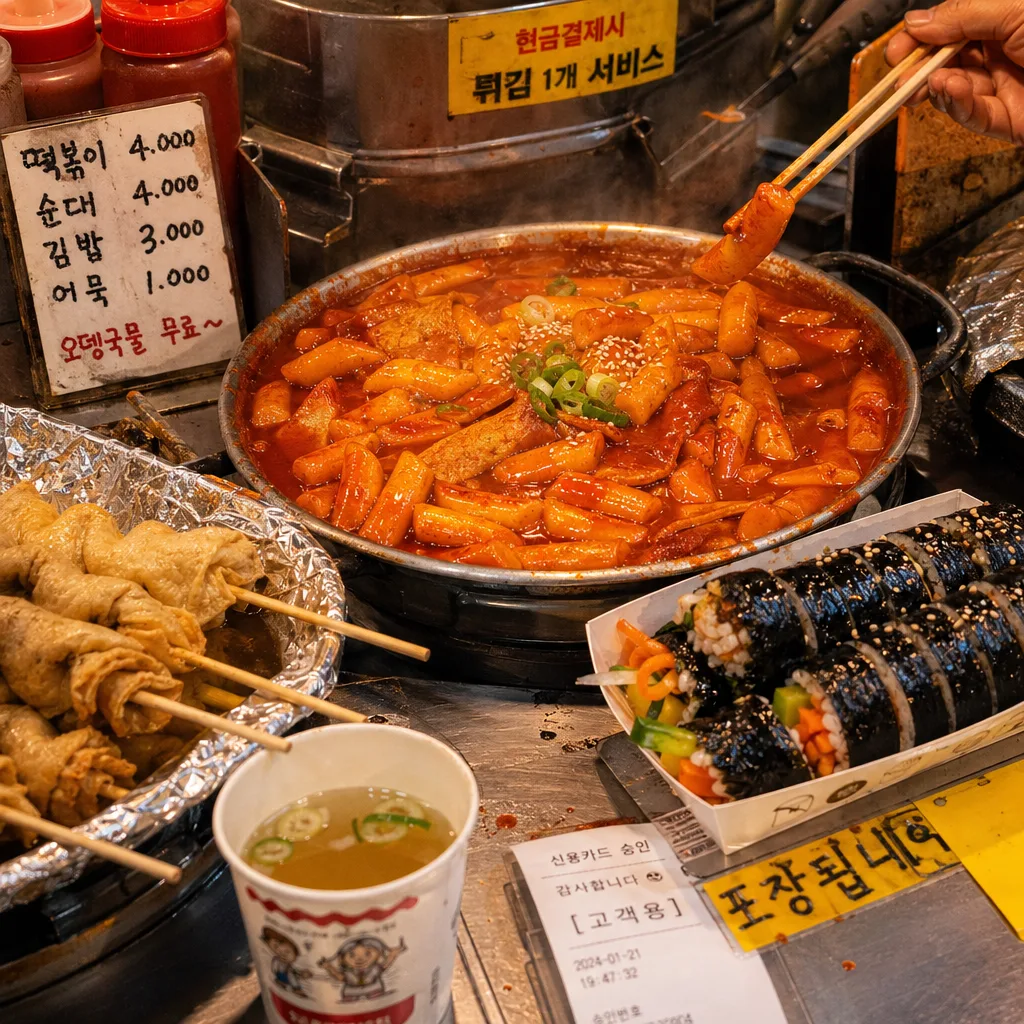
한국 분식 길거리 음식 사진. 자연광 + 따뜻 결.
한국 분식 길거리 음식 검색 요약
한국 분식 길거리 음식은 광고/포스터 결과물을 만들 때 바로 복사해 활용할 수 있는 ChatGPT 이미지 프롬프트입니다. 주제, 배경, 스타일, 구도 조건을 함께 담아 빠르게 시안을 만들 수 있도록 구성했습니다.
관련 키워드: 한국 분식 길거리 음식, 한국 분식 길거리 음식 프롬프트, 광고/포스터 프롬프트, 광고/포스터 AI 이미지 프롬프트, ChatGPT 이미지 프롬프트, AI 이미지 생성 프롬프트, AI 프롬프트, 이미지 프롬프트
한국 분식 길거리 음식 활용 포인트
원본 구조를 유지하면서 피사체, 배경, 색감, 구도를 바꿔 다양한 시안으로 확장할 수 있습니다.
- 핵심 소재는 유지하고 브랜드, 계절, 채널 목적에 맞는 색감과 배경을 바꿔보세요.
- 결과가 산만하면 배경 요소를 줄이고 피사체, 구도, 조명 조건을 구체화하세요.
- 복사한 뒤 ChatGPT에서 플랫폼, 화면 비율, 텍스트 포함 여부를 추가로 요청할 수 있습니다.
프롬프트 원문
[Input]
- language: Korean
- output_size: 1024x1024

[Purpose]
Korean street-food editorial product scene, square social post, documentary magazine-style food image.
Designed to showcase classic Korean bunsik with a lively street-market feel, rich local details, and a believable real-stall atmosphere around the food hero.

[Composition]
- Main subject: {음식} placed as the central hero occupying about 55% of the frame, with the most appetizing item slightly above center and supporting items arranged in a loose triangular balance.
- Background: street vendor table / stall counter surface with worn metal, paper liners, sauce splashes, condensation, paper cups, tongs, skewers, napkins, and subtle steam haze; the background should feel like an active local stall while remaining softly separated from the hero.
- Foreground and props: {결} visible in the lower third and side edges, with {장면} integrated naturally so the scene feels candid rather than staged.
- Realistic stall details: include a small handwritten Korean menu strip, a price tag, a partial plastic order tray, a receipt corner, condiment bottles, and disposable chopsticks arranged as they would appear during actual service.
- Spacing and framing: square composition with tight edge-to-edge food coverage, layered foreground/background details, and a documentary snapshot feel; preserve a clear central reading path from top-left to bottom-right.

[3. CORE STRUCTURE]
1. Hero food zone (center 55%): {음식} presented as the primary focal point, with glossy sauce highlights, visible texture, realistic steam where applicable, crisp fried edges, chewy rice-cake surfaces, and small sesame or scallion garnish details if appropriate.
2. Supporting street details (lower third and side edges): {결} placed beside or beneath the hero, using practical street-food containers such as paper boats, stainless trays, plastic bowls, skewers, foil sheets, wax paper liners, and casual serving cues.
3. Human-scale context accents (small background or edge presence): {장면} included as cropped, partial, non-identifying hand interaction to imply a real street stall environment, such as chopsticks lifting one bite, a vendor ladle at the edge, or a customer hand holding a paper cup.
4. Atmosphere layer: visible steam, slight oil sheen, sauce drips, wet metal reflections, crumbs, small splashes, stacked trays, and warm stall clutter rendered with authentic documentary realism rather than polished ad styling.
5. Color anchoring: {컬러} used across sauces, signage fragments, wrappers, condiment caps, printed menu slips, and ambient stall lighting to unify the frame.
6. Local text layer: add small readable Korean stall details such as menu names, prices, and service notes in the background or side edges, scaled naturally and not dominating the food.

[4. STYLE RULES]
- Typography: small stall signage and menu labels may appear; use Pretendard or Noto Sans KR bold, compact, and highly legible, with a hand-painted or marker-written street sign feel.
- Color palette: {컬러} with dominant red, yellow, amber, and charcoal accents; support with warm cream, stainless metal-gray, translucent plastic, and faded paper tones.
- Border/shadow: soft natural contact shadows beneath bowls, skewers, cups, and trays; use real tabletop reflections, sauce shine, steam diffusion, and practical stall lighting.
- Text placement: Korean text should appear as real environmental signage, price tags, receipt snippets, or menu cards, partially angled or cropped where natural but still legible if visible.

[5. VISUAL STYLE]
- Camera / lens: 35mm documentary food photography look on a full-frame camera, f/2.8 to f/4, natural perspective with slight depth separation.
- Lighting: warm yellow LED stall lighting mixed with available daylight, with directionality from upper-left and gentle fill from the front to preserve texture on sauce and steam.
- Color grade: warm amber-red street-food grade with charcoal contrast, slightly desaturated background, and rich saturated highlights on the food.
- Rendering realism: real food surface variation, imperfect handmade shapes, sauce pooling, oil sparkle, paper fibers, scratched metal, plastic wrap reflections, and shallow depth-of-field bokeh from stall bulbs.

[6. MOOD]
Korean street-market documentary — like a feature spread from National Geographic or a Dazed-style urban food editorial, candid, locally grounded, appetizing, busy with real vendor-life details, and full of warm evening market energy.

[7. CRITICAL]
- Korean text accuracy: any Korean lettering visible in the scene must be clean and fully legible, with no broken characters.
- Add realistic Korean stall text where appropriate, such as “오늘의 분식”, “떡볶이 ₩4,500”, “순대 ₩5,000”, “튀김 3개 ₩2,000”, “어묵 국물 셀프”, “매운맛 선택”, or “현금·카드 가능”.
- Visual invariants: the frame must keep the food as the hero, preserve the street-stall documentary feel, and avoid making the image look like a studio advertisement.
- Keep {음식}, {결}, {장면}, {조명}, {컬러}, {결 추가}, and {비율} conceptually intact if referenced by the original preset values; do not replace the subject with a different cuisine or setting.

[8. 🚫 PROHIBITED]
- Fake official seals / certifications
- Broken Korean characters
- Celebrity composites / unauthorized likeness